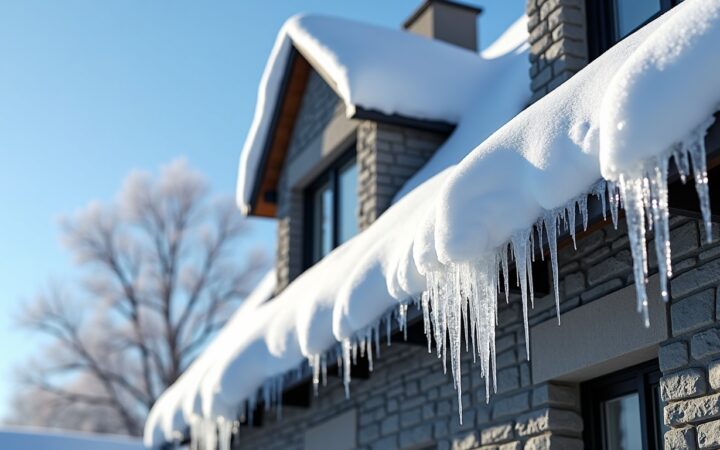
When snow piles up on the roof and temperatures swing above and below freezing, ice dams can form along the eaves. They look like thick ridges of ice, often with icicles hanging below, and they can push meltwater under your shingles and into your ceilings and walls. For Pennsylvania homeowners, understanding ice dams is one of the best ways to protect a roof through winter.
What is an ice dam?
An ice dam is a ridge of ice that builds up at the edge of a roof and blocks melting snow from draining. Water pools behind the dam, backs up under the shingles and leaks into the attic or down interior walls. The weight of the ice can also pull on gutters and damage fascia boards.
Why ice dams form
Ice dams are really a heat problem. Warm air from the living space leaks into the attic and warms the roof deck. Snow on the upper roof melts, and the water runs down to the colder eaves, where it refreezes. Over days and weeks, that cycle builds a dam. Three things make it more likely:
- Air leaks from the house into the attic around light fixtures, attic hatches, chimneys and plumbing penetrations
- Too little insulation over the ceiling, which lets heat escape
- Poor attic ventilation, which keeps the roof deck warm instead of letting cold air flow underneath
Warning signs to watch for
- Large icicles or thick ice along the eaves and in gutters
- Water stains on ceilings or walls near exterior walls
- Peeling paint or damp spots on interior walls after snow melts
- Frost or dampness on the underside of the roof deck in the attic
- Water dripping from soffit vents
How to prevent ice dams for good
The lasting solution is to keep the roof deck cold and the heat inside the house. Work through these steps in order.
Seal air leaks first
Seal gaps around recessed lights, attic hatches, wiring and plumbing that pass from the living space into the attic. Sealing air leaks usually delivers more benefit than adding insulation alone.
Add or upgrade insulation
Most attics benefit from a thick, even layer of insulation across the floor. Check that insulation does not block the soffit vents at the eaves.
Improve ventilation
A balanced system draws cold air in through soffit vents and lets it out through a ridge vent or other exhaust vents. This keeps the underside of the roof close to outdoor temperature, which reduces melting and refreezing.
Keep gutters clear
Clean gutters and downspouts in the fall so meltwater has a path to drain. Gutters packed with leaves hold water and freeze solid, which makes ice buildup worse.
Use ice and water protection when roofing
When a roof is replaced, a self-sealing waterproof membrane along the eaves and in valleys gives extra protection if water does back up. It does not fix the cause of ice dams, but it limits the damage.
What to do if you already have an ice dam
Avoid chipping at the ice with a hammer, axe or pick, which can damage shingles and gutters. Do not climb a snowy, icy roof. Instead, you can use a roof rake from the ground to gently pull snow off the lower few feet of the roof, and place buckets or towels to catch leaks inside. If water is entering your home, call a professional. A roofer can safely remove snow and ice, and inspect for damage.
Schedule a winter check before the first snow
The best time to prevent ice dams is before winter arrives. An inspection in the fall can catch worn flashing, loose shingles, clogged gutters and ventilation problems while the weather is still easy to work in. Economy Roofing PA can inspect your roof and recommend simple fixes. Contact us for a free estimate, and call our 24-hour line if a winter leak catches you by surprise.