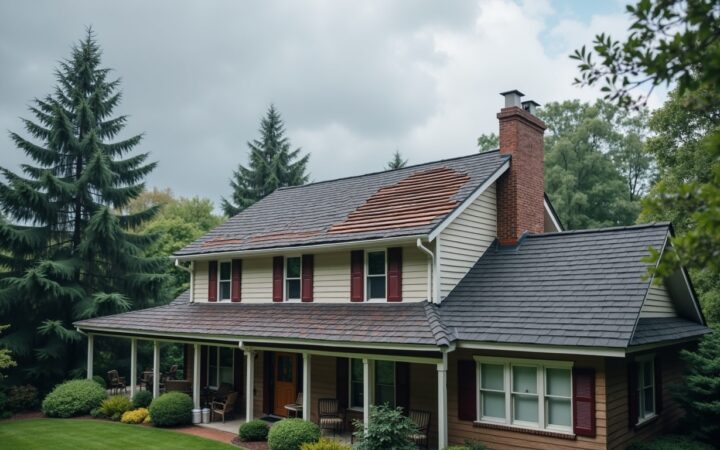
A hailstorm or a night of high winds can leave you wondering what happened up on your roof. Storm damage is stressful, and the first few days matter. The steps you take now protect your family, limit further damage and make your insurance claim smoother. Here is a practical checklist to follow.
1. Put safety first
Before you think about the roof, check your home and yard. Stay away from downed power lines and anything they touch, and call 911 if you see one. Do not climb onto a damaged roof. Wet, damaged surfaces are slippery, and weakened sections may not support your weight. If you see sagging ceilings, bulging drywall or water near electrical fixtures, keep out of that room and turn off power to the area if it is safe to reach the panel.
2. Document everything
Photos and notes are the foundation of a good insurance claim. From the ground, walk around your home and photograph:
- Dented gutters, downspouts, vents and metal flashing
- Shingle pieces or granules lying on the ground or in gutters
- Damaged siding, fences, windows and outdoor furniture, which help show the size of the storm
- Any water stains or drips inside your home, with the date and time
Write down when the storm hit and what you noticed afterward. If you have photos of your roof from before the storm, keep them handy.
3. Stop further damage
Most insurance policies expect you to take reasonable steps to prevent more damage. Place buckets under drips, move furniture and valuables away from leaks and cover exposed areas if you can do so safely from inside. For roof openings or missing shingles, call a roofer for emergency tarping. A professional tarp job keeps water out until permanent repairs can be made, and a good contractor will photograph the damage before covering it.
4. Contact your insurance company
Call your insurer or agent soon after the storm to start a claim. Many policies set a deadline for reporting storm damage, and the terms vary, so check yours. Ask what is covered, whether you have a separate wind or hail deductible and what documentation they want. Keep a record of every call, including the date, the name of the person you spoke with and what was said.
5. Get a professional roof inspection
Hail damage is often hard to see from the ground. Bruised shingles can have soft spots where the protective granules were knocked loose, and cracks may be small. A trained roofer will check the shingles, flashing, vents, valleys and gutters and give you a written assessment with photos. That report is useful when you talk with your adjuster.
What a roofer looks for
- Bruises, cracks or dark spots where granules have been displaced
- Lifted, creased or missing shingles from wind
- Dented ridge caps, vents and flashing
- Damaged gutters and fascia
- Debris impact from branches
6. Understand your repair options
Depending on the damage, the fix could be as simple as replacing a few shingles or as complete as a new roof. Isolated wind damage is often repairable. Widespread hail damage across all slopes usually calls for replacement because the roofing system as a whole has been compromised. Ask your roofer to explain which category your roof falls into and to put the scope in writing.
7. Be cautious with storm chasers
After big storms, out-of-area crews often go door to door offering quick deals. Be careful about signing anything on the spot or handing over a large deposit. Choose a roofer with a local address and phone number, ask for references and get everything in writing.
Watch for delayed signs
Storm damage does not always show itself right away. Water that gets under damaged shingles can take weeks to appear as a ceiling stain. In the months after a storm, check your ceilings and attic after rain, and look for new granules in your gutters. Catching a slow leak early is far cheaper than repairing rotted decking and insulation later.
Need help after a storm?
Economy Roofing PA offers emergency tarping and repairs 24 hours a day, plus full storm and hail damage inspections. Call us for a free estimate, and we will document the damage and explain your options in plain language.